🐶 Labomaru’s Quick Take & Specs
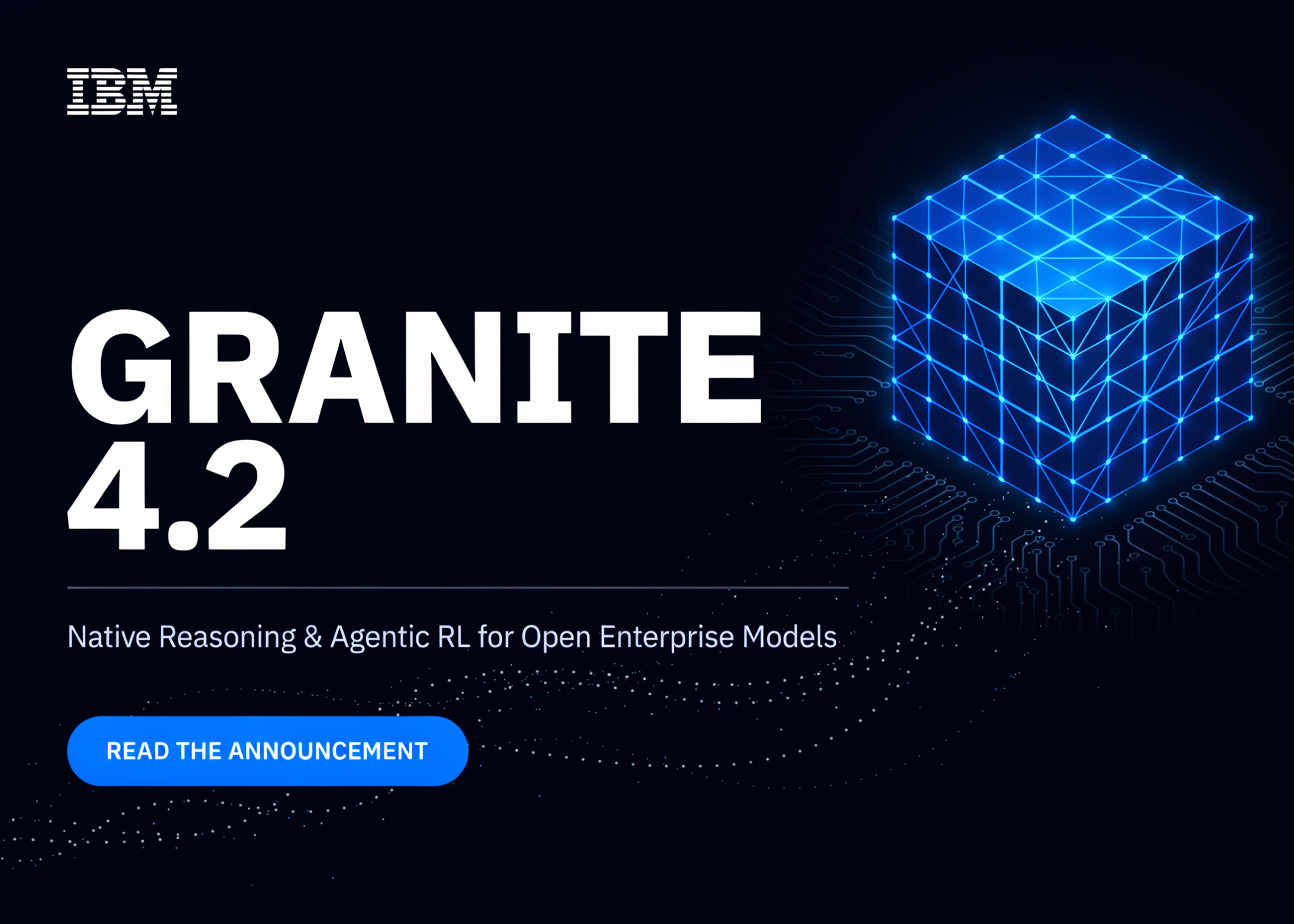
“IBM Granite 4.2 brings native reasoning and agentic reinforcement learning to open enterprise models, transforming automated workflows without sacrificing privacy! 🐶⚡”
- 🚀 Tool Type: Frontier Breakthrough / Open-Weight LLM
- 💻 System Requirements: Local GPU (RTX 3090/4090 24GB VRAM for 8B/14B quantized) OR Enterprise Cloud Instance
- 🎯 Best For: Enterprise Developers, Workflow Automators, AI Engineers
- ✨ Key Benefit: Cuts reliance on expensive proprietary APIs while delivering native step-by-step reasoning and multi-step tool use.
1. Key Takeaways & Real-World Impact (Before vs. After)
IBM’s release of Granite 4.2 represents a major milestone in open-weight foundation models designed specifically for enterprise environments. Previous enterprise AI deployments faced a tough trade-off: either route sensitive proprietary data to third-party closed-source models to get advanced reasoning capabilities, or host smaller open models locally that frequently failed at multi-step agentic workflows and tool execution.
- Before Granite 4.2: Enterprise agentic workflows required chaining multiple brittle prompts or relying heavily on expensive proprietary APIs like GPT-4o. Open-weight models often hallucinated function arguments, lost context in multi-turn reasoning, or required custom finetuning for complex tool calling.
- After Granite 4.2: Businesses can deploy open-weight models equipped with native chain-of-thought reasoning and Reinforcement Learning from Agentic Feedback (RLAF). Granite 4.2 executes multi-step task planning, code synthesis, and API function calling locally or on private cloud infrastructure with high fidelity and zero data leakage risks.
2. Hardware Specs & Setup Complexity
- VRAM Requirements:
- 3B / 8B Parameters: 8GB to 16GB VRAM (Runs smoothly on standard developer workstations like RTX 3060/4070 or Apple Silicon M-series Macs).
- 14B / 32B Parameters: 24GB to 48GB VRAM (Runs locally on single consumer flagships like RTX 3090/4090 or enterprise V100/A10G GPU instances).
- Deployment Options: Available directly via Ollama, Hugging Face Transformers, vLLM, and IBM watsonx.ai.
- Setup Complexity: Low to Moderate (1-Click deployment via Docker/Ollama command
ollama run granite4.2or vLLM CLI).
3. Comparative Analysis & Benchmarks
| Criteria | IBM Granite 4.2 | Proprietary Frontier Models | Legacy Open-Weight Models |
|---|---|---|---|
| Native Reasoning | Built-in Agentic RL & CoT | High (Closed Source) | Limited / External Prompting Needed |
| Data Privacy | 100% On-Prem / Private Cloud | Data shared via Cloud API | 100% On-Prem / Private Cloud |
| License & Commercial Use | Permissive Apache 2.0 | Subscription / Per-Token API | Varies (Some non-commercial) |
| Tool Calling Accuracy | High (Optimized via RLAF) | Very High | Moderate / Inconsistent |
| Operational Cost | Fixed Infrastructure Cost | Scaling API Token Costs | Fixed Infrastructure Cost |
4. Pro Tips & Maximum Productivity Recipes
Recipe 1: Local Agentic Function Calling with vLLM
Deploy Granite 4.2 using vLLM’s OpenAI-compatible server with structured output tools:
python -m vllm.entrypoints.openai.api_server \
  --model ibm-granite/granite-4.2-8b-instruct \
  --enable-auto-tool-choice \
  --tool-call-parser granite
Recipe 2: Prompt Pattern for Step-by-Step Native Reasoning
To trigger native deep reasoning before outputting structured JSON, format your prompt using special instruct tags:
<|system|>
You are an autonomous enterprise agent. Break down the task into explicit logical reasoning steps within <thought> tags before issuing final tool calls or answers.
<|user|>
Analyze the customer support ticket, classify sentiment, check inventory via database_query tool, and draft a response.
5. Potential Pitfalls & Edge Cases
- Hardware Overhead during Extended Context Processing: Deep reasoning traces consume additional output tokens, increasing generation latency and memory utilization during long-context operations.
- Strict Prompt Formatting Requirements: Granite 4.2 performs best when adhering strictly to its exact instruct formatting tokens (
<|system|>,<|user|>,<|thought|>). Deviating from these templates can degrade tool-calling performance. - Domain-Specific Tuning: While general enterprise tasks (SQL generation, Python coding, data transformation) excel out-of-the-box, highly specialized legal or medical domains still benefit from targeted LoRA fine-tuning.
6. Final Verdict & Key Takeaways
IBM Granite 4.2 is a game-changer for organizations aiming to build robust, secure, and cost-effective AI agents. By integrating native reasoning directly into open-weight architectures, IBM provides a compelling alternative to proprietary SaaS APIs. Developers and enterprise leaders should evaluate Granite 4.2 immediately for local tool-calling pipelines, automated backend orchestration, and privacy-sensitive enterprise workflows.