🐶 Labomaru’s Quick Take & Specs
“Community forums like r/LocalLLaMA are buzzing with discussions surrounding Qwen3.8-Flash-Next and DeepSeek V4 Pro, but separating community hype from verified performance requires a closer look! 🐶⚡”
- 🚀 Tool Type: Open-Weights / Community-Discussed LLMs
- 💰 Cost & Pricing: Unconfirmed (Pending official developer release)
- 💻 System Requirements: Unverified (Standard local LLMs typically target 16GB+ VRAM)
- 🎯 Best For: Local LLM Enthusiasts, AI Engineers, Privacy-Focused Developers
- ✨ Key Benefit: Promises high-speed inference potential with local data sovereignty
1. Key Takeaways & Real-World Impact (Hype vs. Fact)
The open-source AI community actively monitors online discussions for next-generation architecture leaks and early performance claims. Recent threads comparing Qwen3.8-Flash-Next to DeepSeek V4 Pro highlight the growing appetite for high-throughput, locally hosted alternatives to proprietary cloud APIs.
- The Promise (Community Hype): Claims suggest Qwen3.8-Flash-Next delivers sub-second latency and competitive reasoning against large commercial models like DeepSeek V4 Pro without requiring multi-GPU server clusters.
- The Reality (Verified Primary Facts): Primary documentation, quantitative benchmark suites, developer organization details, and official hardware requirements remain unconfirmed. Developers should approach unverified forum performance claims with caution until official open-source weights and standardized evaluations are released.
2. Hardware Specs, Pricing & Setup Complexity
While official specifications for Qwen3.8-Flash-Next have not been published, evaluating similar open-weights architectures provides a baseline for local hardware planning.
- Hardware Baseline (General Open LLMs): Running mid-sized open models locally generally requires a minimum of 16GB VRAM (e.g., NVIDIA RTX 4060 Ti 16GB / RTX 4080) for 4-bit or 5-bit quantized execution (GGUF/EXL2), or 36GB+ unified memory on Apple Silicon.
- Pricing & Licensing: Specific license terms and developer details for Qwen3.8-Flash-Next are unannounced. Standard open-weights models typically offer free community usage under permissive open licenses.
- Setup Complexity: Moderate to Advanced. Execution relies on local runtimes such as llama.cpp, Ollama, or vLLM requiring manual CLI configuration and VRAM offloading tuning.
3. Comparative Analysis & Market Framing
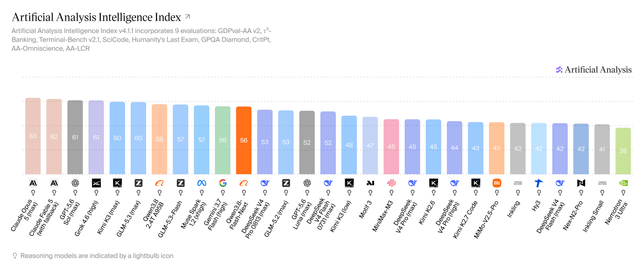
Because official benchmark metrics for Qwen3.8-Flash-Next and DeepSeek V4 Pro are currently unverified, the following table compares typical local quantized model workflows against commercial cloud endpoints.
| Metric / Feature | Qwen3.8-Flash-Next (Unverified) | DeepSeek V4 Pro (Unverified) | Standard Cloud APIs |
|---|---|---|---|
| Official Verification | Unconfirmed / Forum Leak | Unconfirmed / Cloud Draft | Verified / Published |
| Deployment Model | Expected Local / Self-Hosted | Expected Cloud / Hybrid | Cloud SaaS API |
| Quantitative Benchmarks | Pending Official Release | Pending Official Release | Standardized (MMLU, HumanEval) |
| Data Privacy | Local / Air-Gapped Potential | Third-Party Dependent | Third-Party Dependent |
| Hardware Requirement | Unconfirmed (Est. 16GB+ VRAM) | Hosted Infrastructure | Minimal (Client Device) |
| Operational Model | Zero Recurring API Fees | Pay-Per-Token / Subscription | Pay-Per-Token / Subscription |
4. Pro Tips for Local Model Optimization
If you plan to test high-throughput open-weights models once officially released, prepare your local environment with these performance optimization techniques:
- Enable FlashAttention: Use
--flash-attnin your runtime (vLLM or llama.cpp) to significantly lower memory bandwidth pressure during extended context processing. - Optimize Quantization Layers: Balance quality and speed by opting for medium-bit quantizations (e.g., Q4_K_M or Q5_K_S) rather than full precision FP16.
- Enforce Structured Output: Utilize GBNF grammars or JSON schema constraints to ensure zero parsing errors when building automated agent pipelines.
# General setup command for testing open local models via Ollama
ollama run qwen-test --verbose
5. Potential Pitfalls & Edge Cases
- Unverified Community Metrics: Early latency benchmarks on developer forums often reflect single-prompt speed rather than sustained multi-turn reasoning precision.
- VRAM Spikes in Extended Contexts: Running long context windows (>16k tokens) can quickly trigger Out-Of-Memory (OOM) errors unless dynamic KV-cache compression is activated.
- Architecture Compatibility: Newly leaked or experimental model architectures may lack immediate zero-day support in standard execution runtimes like vLLM or Ollama.
6. Final Verdict & Cost-Benefit Recommendation
- Adopt/Prepare If: You maintain an existing 16GB+ VRAM workstation, prioritize strict data privacy, and wish to benchmark new community models as soon as official weights land.
- Wait & Verify If: You depend on fully verified, enterprise-grade SLA performance and standardized benchmark scores before altering production AI infrastructure.
- Summary: While community discussions surrounding Qwen3.8-Flash-Next and DeepSeek V4 Pro point to exciting potential, technical teams should wait for official primary documentation and quantitative benchmark suites before making hardware investment decisions.

![[Early Report] DeepSeek V4.1 Flash Engineering Teardown: Dissecting MoE Efficiency and Benchmark Realities](/images/20260914183600.png)